The Ultimate Guide To Using Ai Images In Digital Marketing
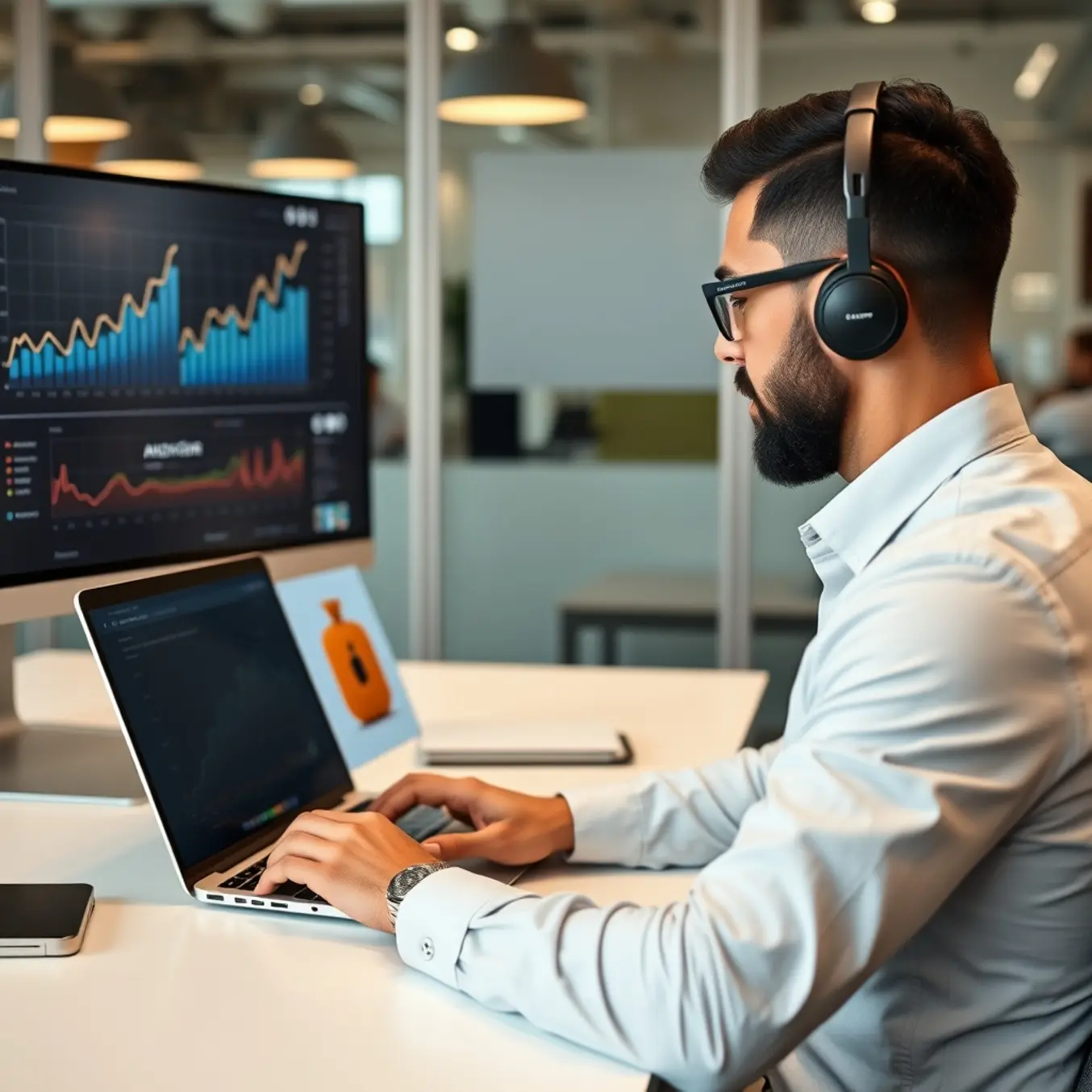
Chapter 1: The AI Image Revolution in Marketing
The digital marketing landscape is undergoing a seismic shift, driven by the rapid emergence of AI-generated visuals. This revolution is fundamentally altering how brands create, personalize, and deploy visual content, moving away from traditional, resource-intensive production methods. AI marketing images represent a new paradigm for visual communication, offering unprecedented speed, scalability, and creative flexibility [Source: Forbes].
This shift is redefining entire marketing workflows. Campaigns can be conceptualized and visualized in minutes rather than weeks, and A/B testing of ad creatives becomes exponentially easier with AI generating dozens of variants. Furthermore, content consistency across global markets is simpler to maintain, as AI can adapt core visual themes to align with local cultural nuances without losing brand identity [Source: Harvard Business Review].
The impact extends beyond logistics into the realm of creativity itself. AI acts as a collaborative partner, helping teams explore diverse artistic styles and conceptual ideas that might have been too time-consuming or costly to attempt. It democratizes advanced visual effects, allowing businesses of all sizes to craft polished, professional visuals. The brands that learn to harness this power effectively will gain a significant competitive advantage in capturing audience attention and driving engagement.
Chapter 2: Top AI Image Tools for Marketers
Choosing the right AI image generator is crucial for marketers. The ideal platform balances creative control, brand consistency, and ease of use. Here’s a comparison of leading tools to help you select the best fit.
DALL-E 3, integrated into ChatGPT, excels at interpreting complex, detailed prompts and rendering text within images. Its seamless workflow is ideal for brainstorming and rapid iteration [Source: OpenAI]. Midjourney is renowned for its stunning, painterly, and highly artistic outputs, making it the go-to for campaigns demanding a strong aesthetic or cinematic quality [Source: Forbes]. For inspiration on the styles it can achieve, see our guide on top AI art styles to explore in 2025.
As an open-source model, Stable Diffusion offers unparalleled control and customization, ideal for teams seeking to build a proprietary, consistent visual library [Source: Stability AI]. Adobe Firefly, built into the Creative Cloud, is designed for commercial safety and seamless integration, with features like “Generative Match” to ensure new images align with an existing brand style [Source: Adobe].
Ultimately, many successful marketing teams use a combination: brainstorming with DALL-E 3, creating hero visuals with Midjourney, and using Firefly to generate scalable, brand-safe variations.
Chapter 3: Practical Applications Across Marketing Channels
AI-generated images are a versatile asset that can elevate content across the entire digital marketing landscape, boosting engagement and brand recognition.
On social media, AI allows marketers to produce a high volume of unique, on-brand graphics for posts, stories, and ads, helping to build a stronger, more recognizable visual identity. It also enables quick adaptation to trends, keeping content timely and relevant. For email marketing, AI can create highly specific and attractive graphics tailored to your subject line, increasing open rates. Some tools even allow for dynamic image variants, enabling a new level of visual personalization at scale [Source: Forbes].
In digital advertising, AI empowers rapid prototyping and A/B testing of different ad creatives to optimize ad spend for better ROI [Source: Marketing AI Institute]. For website and blog content, AI-generated featured images and custom illustrations improve aesthetics, user experience, and SEO by providing unique, topic-aligned visuals. One of the most powerful applications is content repurposing; a single high-quality AI-generated image can be cropped, adapted, and recolored for use across multiple channels, ensuring a unified brand message while maximizing ROI.
Chapter 4: Crafting Effective Prompts for Marketing Success
The key to unlocking AI’s potential lies in effective prompt engineering. Before typing a single word, define your precise marketing objective. A prompt for a social media ad to drive downloads needs a different visual approach than a metaphorical blog header.
An effective prompt is a detailed instruction set. Break it down into core components: the Subject (main focus), Action & Context (what’s happening and where), Style & Aesthetics (visual tone, referencing art movements or photography styles), Technical Details (e.g., “photorealistic, 8K, soft lighting”), and Brand Alignment (incorporating brand colors or mood). Exploring different AI art styles provides a powerful vocabulary for the style component [Source: Buffer].
Master advanced techniques like iterative refinement (using the initial output to hone your instructions), negative prompts to exclude unwanted elements, and leveraging seed numbers for consistency across a series. For campaign-wide consistency, create a “master prompt” template. Once you find a successful combination of style and technical details, use that formula as a baseline for all related assets, swapping out only the core subject and context [Source: Neil Patel].
Chapter 5: Ethical Considerations and Best Practices
Navigating the ethical landscape of AI-generated marketing content is essential. A central concern is copyright. The U.S. Copyright Office has stated that works created solely by AI are not eligible for copyright protection, but a work containing sufficient human authorship may be [Source: U.S. Copyright Office]. The safest practice is to use AI as a collaborative tool for ideation, ensuring a substantial, creative human touch in the final product to establish ownership.
Beyond legalities, ethical marketing demands authenticity and transparency. Implementing rigorous human oversight to vet, fact-check, and align AI outputs with brand values is non-negotiable. To navigate these considerations, adopt a structured framework: audit your AI tools’ data sources, prioritize human creativity (using AI to overcome blocks, not replace thought), develop clear internal use policies, and stay informed on evolving regulations. By embedding these principles, brands can harness AI’s power while maintaining trust.
Chapter 6: Measuring ROI and Performance
To justify investment in AI image generation, marketers must quantify its impact on core business objectives. Start by tracking relevant Key Performance Indicators (KPIs). For engagement, monitor social media likes, shares, and comments. For conversions, track click-through rates (CTR) on ads or emails featuring AI images and the subsequent conversion rates on landing pages.
The most effective way to isolate impact is through controlled A/B testing. Create two versions of a marketing asset identical except for the image—one with a traditional visual, one with an AI-generated visual. Run the test simultaneously to see which performs better, providing empirical evidence for data-driven decisions [Source: Optimizely].
Calculate ROI by comparing the gains (e.g., additional revenue from a lift in conversions) against all costs (tool subscriptions, team time). Consider intangible benefits like faster production cycles and the unique brand identity fostered by custom AI art styles. Implement analytics dashboards to monitor these metrics continuously, building a compelling case for AI’s tangible value.
Chapter 7: Future Trends and Staying Ahead
The future of AI visual tools is moving beyond static 2D images. A significant trend is the generation of 3D models and assets directly from text, which promises to revolutionize product design and virtual experiences by drastically reducing creation time and cost [Source: TechCrunch]. Simultaneously, the rise of generative video and interactive AI media is pushing the boundaries of digital storytelling [Source: Forbes].
Future tools will evolve into hyper-personalized assistants that learn a creator’s unique style, and multimodal AI systems will allow seamless creation across text, voice, and gesture in a single interface [Source: Harvard Business Review]. To stay ahead, adopt a mindset of continuous learning. Dedicate time to explore new features and foundational advancements [Source: Pictomuse Blog]. Develop a hybrid skill set that combines core artistic principles with technical AI literacy. Engaging with creator communities to share experiments and insights is also crucial for navigating this fast-paced evolution.
Chapter 8: Getting Started: Your AI Marketing Action Plan
Integrating AI image generation can be done with a practical, step-by-step approach.
- Audit Your Current Visual Content: Review your website, social media, and ads to identify areas where visuals are lacking or underperforming.
- Define Clear Use Cases and Goals: Set specific objectives tied to KPIs. For example, “Increase email open rates by 15% using unique AI-generated headers.”
- Select and Master Your Tools: Choose one or two primary platforms (e.g., Midjourney, DALL-E 3) and dedicate time to learning prompt engineering. Resources like our guide on top AI art styles can help define visual aesthetics.
- Develop a Brand-Aligned Visual Style Guide: Create a simple guide specifying your color palette, mood, and compositional rules to feed into your prompts for consistency.
- Integrate into Your Workflow: Weave AI into existing processes, like adding a “Visual Concept” step to your blog calendar or using AI to produce variants for A/B testing social ads.
By following this structured plan, you can move from experimentation to strategic implementation, unlocking the power of AI to create more engaging, personalized, and cost-effective visual content.
Sources
- Adobe – Adobe Firefly
- Buffer – The Complete Guide to AI Marketing
- U.S. Copyright Office – Copyright and Artificial Intelligence
- Forbes – The AI Revolution In Marketing: How To Leverage Artificial Intelligence For Business Growth
- Forbes – The Future Of Marketing: How AI Is Transforming Creative Content
- Forbes – AI Image Generators Like Midjourney And DALL-E Are Changing Marketing—Here’s How
- Forbes – The Future Of Generative AI: 5 Trends To Watch Out For In 2024
- Harvard Business Review – How Generative AI Is Changing Creative Work
- Harvard Business Review – How Generative AI Will Transform Creative Work
- Marketing AI Institute – How to Use AI in Marketing: 29 Examples and Tools
- Neil Patel – AI Content Marketing: The Good, The Bad, and The Ugly
- OpenAI – DALL·E 3
- Optimizely – A/B Testing
- Pictomuse – Top AI Art Styles to Explore in 2025
- Stability AI – Stable Diffusion 3
- TechCrunch – AI startups want to generate entire 3D worlds


