The Future Of AI Creativity From Tools To Collaborative Partners
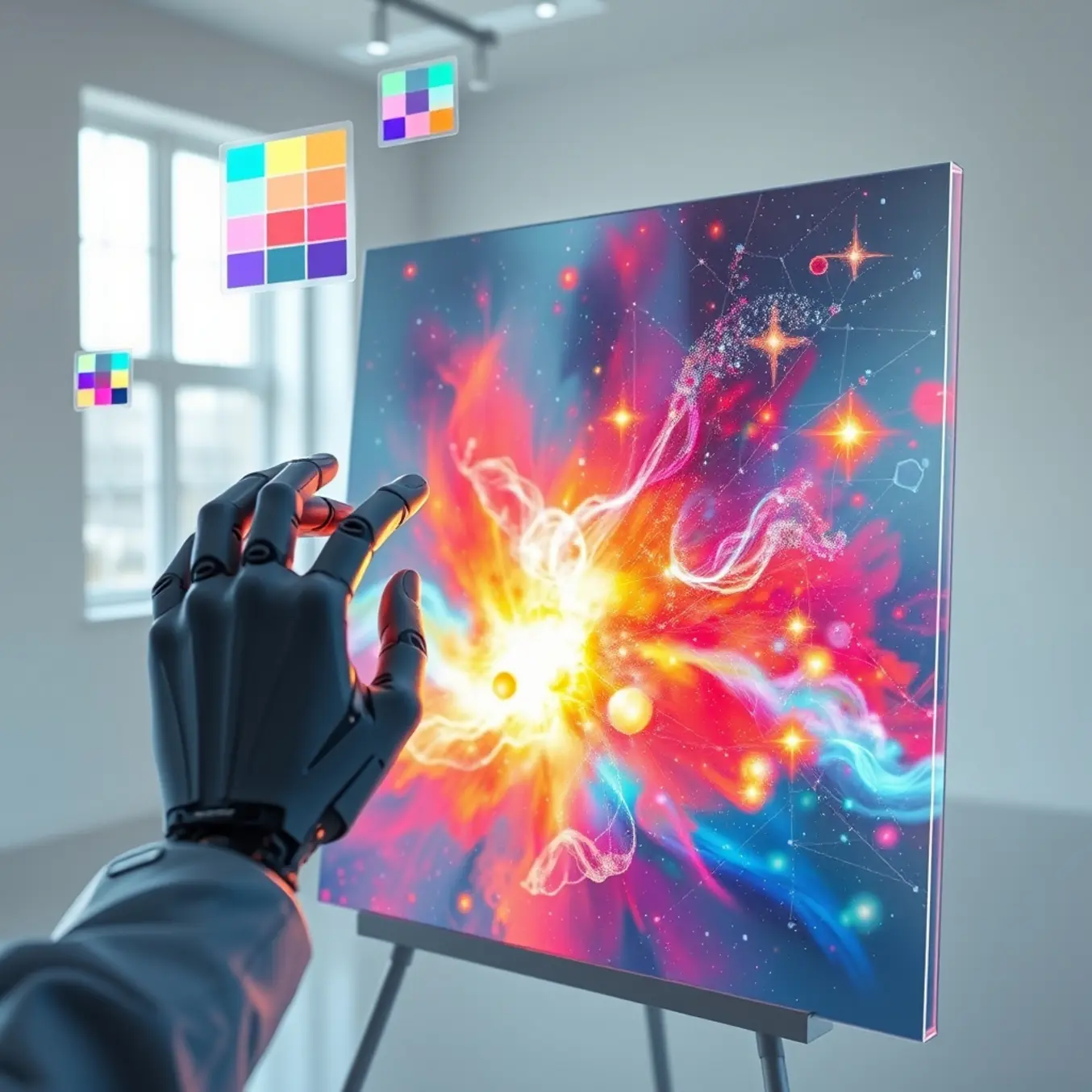
The Dawn of AI Art: Early Neural Networks
The journey of AI-generated art began long before today’s sophisticated models. In the 1960s, artists and computer scientists first experimented with algorithmic art, creating geometric patterns and abstract compositions through programmed instructions. However, the true breakthrough came with the development of neural networks capable of learning artistic styles. Early convolutional neural networks demonstrated the ability to separate and recombine content and style from different images, laying the foundation for today’s AI art revolution.
Generative Adversarial Networks: A Creative Breakthrough
The introduction of Generative Adversarial Networks (GANs) in 2014 marked a significant milestone in AI art development. This architecture pitted two neural networks against each other—one generating images and the other discriminating between real and generated content. The competition drove rapid improvement in output quality. Notable early implementations included DeepDream, which created surreal, dream-like imagery by enhancing patterns in existing images. Meanwhile, platforms like Artbreeder emerged, allowing users to blend and evolve images through simple sliders.
GANs enabled the creation of increasingly convincing artwork, with projects like “Edmond de Belamy” making headlines in 2018 when it sold at Christie’s for $432,500. This auction result demonstrated both the commercial potential and artistic acceptance of AI-generated creations. The technology continued evolving, with StyleGAN and its successors producing remarkably detailed and customizable portraits and landscapes.
The Diffusion Revolution: Current State of AI Art
Today’s AI art landscape is dominated by diffusion models, which have dramatically improved image quality and creative control. These models work by gradually adding noise to training images, then learning to reverse this process to generate new images from random noise. The results are often photorealistic and highly detailed, surpassing earlier technologies in coherence and aesthetic appeal.
Major platforms have emerged around these advanced models. Midjourney has gained popularity for its distinctive artistic style and strong community features, operating primarily through Discord. Meanwhile, DALL-E from OpenAI offers impressive contextual understanding and editing capabilities. Stable Diffusion stands out for its open-source nature, enabling widespread customization and local deployment. These platforms continue to evolve, incorporating better prompt understanding, higher resolution outputs, and more sophisticated editing tools.
Looking Forward: The Future of AI Art Creation
The rapid advancement from simple neural style transfer to today’s sophisticated diffusion models demonstrates the accelerating pace of innovation in AI art. Current research focuses on improving temporal consistency for video generation, enhancing 3D model creation, and developing better control mechanisms for artists. As these technologies mature, they’re likely to become integrated into standard creative workflows, offering new tools for both professional artists and casual creators.
Ethical considerations around copyright, attribution, and the definition of artistry continue to evolve alongside the technology. Nevertheless, the trajectory from early experiments to today’s powerful platforms shows no signs of slowing, promising even more sophisticated and accessible creative tools in the coming years.
Next-Generation AI Creative Platforms
The landscape of AI creative tools has evolved dramatically from simple text-to-image generators to sophisticated platforms that integrate seamlessly into professional workflows. Leading this transformation are platforms like Midjourney, which continues to refine its artistic capabilities, and Adobe Firefly, deeply integrated into the Creative Cloud ecosystem. These platforms now offer unprecedented control over style, composition, and artistic direction through advanced prompting systems and fine-tuning options [Source: Adobe].
Meanwhile, emerging platforms like Leonardo AI and Stable Diffusion 3 are pushing boundaries with specialized models for different creative domains. Leonardo AI excels in character design and concept art generation, while Runway ML has become a go-to for video creators with its generative video capabilities [Source: Runway ML]. These platforms increasingly focus on maintaining artistic consistency across multiple generations, a crucial feature for professional projects requiring coherent visual storytelling.
Real-Time Generation Capabilities
Real-time AI generation represents the next frontier in creative technology, dramatically reducing the iteration cycle that traditionally slows down creative workflows. Tools like NVIDIA Canvas demonstrate this capability by allowing artists to paint with simple brush strokes that instantly transform into photorealistic landscapes [Source: NVIDIA]. This immediate feedback loop enables creators to experiment more freely and make rapid adjustments based on visual results rather than abstract concepts.
The implications for collaborative work are equally significant. Platforms now support multiple users working simultaneously on AI-generated assets, with changes reflecting in real-time across all collaborators’ screens. This synchronous creation process mimics traditional studio environments while leveraging AI’s computational power. For instance, some platforms allow teams to collectively refine AI-generated concepts during brainstorming sessions, merging human creativity with machine efficiency in unprecedented ways.
AI-Assisted Professional Workflows
Professional creators are increasingly adopting AI as a collaborative partner rather than a replacement for human creativity. In graphic design, tools like Canva’s Magic Studio integrate AI throughout the design process, from generating initial concepts to refining final layouts [Source: Canva]. Similarly, video editors use AI for tasks like automatic scene detection, color grading suggestions, and even generating B-roll footage that matches existing content.
The integration extends to 3D modeling and animation, where AI assists with texture generation, lighting optimization, and even character rigging. Tools like Kaedim convert 2D images into 3D models automatically, saving countless hours in the modeling pipeline [Source: Kaedim]. These AI-assisted workflows allow professionals to focus on high-level creative decisions while automating repetitive technical tasks, ultimately enhancing both efficiency and creative output quality.
Emerging Creative Applications
Beyond traditional creative fields, AI is enabling entirely new forms of artistic expression. Generative music platforms create original compositions based on mood parameters, while AI writing assistants help craft compelling narratives across different AI art styles. The intersection of AI with augmented and virtual reality opens additional possibilities for immersive experiences that adapt to user interactions in real-time.
Furthermore, AI is democratizing specialized creative skills. Architectural visualization, product design, and fashion concepting—previously requiring years of specialized training—are becoming accessible through intuitive AI interfaces. This accessibility doesn’t diminish professional expertise but rather amplifies it, allowing creators to explore concepts that would be prohibitively time-consuming using traditional methods alone.
AI’s Expanding Role in Creative Industries
Artificial intelligence is fundamentally reshaping creative fields by introducing powerful new tools and capabilities. In graphic design, platforms like Adobe Firefly enable designers to generate complex visuals from simple text descriptions, dramatically accelerating the creative process. Similarly, AI-powered tools in advertising help create personalized campaigns that resonate with specific audience segments.
Photography has seen remarkable transformations through AI integration. Advanced algorithms can now enhance image quality, remove unwanted objects, and even generate entirely synthetic photographs that are indistinguishable from real ones. These capabilities are revolutionizing how photographers approach both the creative and technical aspects of their craft.
Entertainment Industry Evolution
The entertainment sector is experiencing perhaps the most dramatic AI-driven changes. Film studios now use AI for everything from script analysis to visual effects generation. Streaming platforms leverage machine learning to recommend content and even influence production decisions based on viewer preferences. Meanwhile, music composition tools powered by AI can generate original scores and assist musicians in exploring new creative directions.
New Professional Opportunities
Despite concerns about automation replacing human creativity, AI is actually creating numerous new career paths. Companies now seek AI prompt engineers, machine learning specialists with artistic backgrounds, and creative directors who understand how to integrate AI tools into traditional workflows. The demand for professionals who can bridge the gap between technical AI capabilities and creative vision continues to grow across all creative sectors.
Balancing Innovation and Authenticity
As AI becomes more integrated into creative processes, industry professionals face the challenge of maintaining artistic authenticity while leveraging these powerful tools. Many creatives are finding that the most successful approach involves using AI as a collaborative partner rather than a replacement for human creativity. This balanced approach allows for enhanced productivity while preserving the unique human elements that make creative work compelling.
The transformation extends beyond individual creative tasks to entire business models. Agencies that successfully integrate AI report significant improvements in efficiency and the ability to take on more complex, innovative projects. However, this shift requires ongoing adaptation and learning as AI capabilities continue to evolve at a rapid pace.
How AI Serves as a Creative Partner for Artists
The conversation around artificial intelligence in creative fields often centers on replacement, but a more accurate perspective reveals AI as a powerful collaborative tool that enhances rather than replaces human creativity. Artists across disciplines are discovering that AI can serve as an imaginative partner, offering new possibilities while keeping the artist firmly in the creative driver’s seat.
Augmenting the Creative Process
AI tools function as creative amplifiers, providing artists with expanded capabilities and fresh perspectives. These systems can generate countless variations of an idea, suggest unexpected color palettes, or propose compositional arrangements that might not have occurred to the human mind alone. This partnership allows artists to explore creative territories more efficiently while maintaining ultimate artistic control.
Digital artists report that AI assists in overcoming creative blocks by offering alternative directions when inspiration wanes. Meanwhile, traditional artists find value in using AI to visualize concepts before committing them to physical media. The technology serves as a brainstorming companion that never tires, constantly generating new possibilities for the artist to consider and refine.
Maintaining Artistic Vision and Control
Critically, the artist remains the decision-maker throughout the creative process. AI generates options, but the human creator selects, modifies, and combines these elements according to their unique vision. This dynamic preserves the essential human elements of intention, emotion, and meaning that define artistic expression.
Many contemporary artists describe their workflow as a dialogue with AI—posing questions, evaluating responses, and guiding the technology toward their aesthetic goals. The artist’s expertise in composition, color theory, and narrative provides the essential framework within which AI operates as a tool rather than an autonomous creator.
Exploring New Artistic Frontiers
The collaboration between human and artificial intelligence is opening previously unimaginable creative possibilities. Artists can now experiment with hybrid techniques that blend traditional methods with AI-generated elements, creating works that transcend conventional artistic categories. This fusion approach allows for the exploration of complex concepts and visual languages that would be difficult to achieve through either method alone.
For those interested in specific applications, our guide to top AI art styles to explore in 2025 demonstrates how artists are pushing boundaries with these new tools. The emerging aesthetic movements showcase the unique creative potential that arises when human intuition meets algorithmic generation.
The Evolving Role of the Artist
Rather than making artistic skill obsolete, AI collaboration requires artists to develop new forms of creative expertise. The modern artist must become proficient in directing AI systems, understanding their capabilities and limitations, and integrating their output into coherent artistic statements. This evolution parallels historical shifts where new technologies transformed artistic practice without diminishing the importance of human creativity.
According to research from the National Endowment for the Arts, artists working with AI often describe enhanced creative freedom rather than technological constraint. The technology handles repetitive tasks and generates raw material, freeing the artist to focus on higher-level conceptual decisions and emotional expression.
A study published in Scientific Reports found that AI-assisted artists produced work that was rated as more original and technically accomplished than either purely human-created or fully AI-generated art. This suggests that the human-AI partnership creates a synergistic effect where the whole becomes greater than the sum of its parts.
As the Museum of Modern Art notes in its analysis of AI in contemporary art, the most compelling works using these technologies maintain a clear human authorship while leveraging AI’s unique capabilities. The technology becomes another brush in the artist’s toolkit—one with distinctive properties that enable new forms of expression.
Navigating Copyright and Ownership in AI Art
The legal landscape surrounding AI-generated art remains complex and largely unsettled. A fundamental question persists: who owns the copyright to an image created by an artificial intelligence? In the United States, the U.S. Copyright Office has maintained that works lacking human authorship cannot be copyrighted. This was affirmed in a key case involving an AI-generated artwork, where the office stated copyright protection requires a “human author.”
However, the situation is nuanced. If a human provides significant creative input—such as crafting detailed, iterative prompts and making substantial creative selections—there may be a stronger claim to a joint authorship role. This evolving interpretation suggests that the more directive and creative your involvement, the stronger your potential ownership claim becomes.
Data Privacy and Training Data Scrutiny
Another major area of concern is data privacy and the provenance of training data. Many AI art generators are trained on massive datasets of images scraped from the public internet, often without the explicit consent of the original artists. This practice has sparked numerous lawsuits from artists and content creators alleging copyright infringement.
Consequently, users should be aware of the potential ethical and legal implications of the tools they use. The output you generate could be based on copyrighted material, raising questions about derivative works. For a deeper look at the creative possibilities within this new medium, explore our guide on the top AI art styles to explore in 2025.
The Evolving Regulatory Landscape
Governments and international bodies are actively working to catch up with the rapid advancement of AI. The European Union’s AI Act is a pioneering piece of legislation that aims to establish a comprehensive legal framework for artificial intelligence, categorizing systems by risk and imposing transparency requirements.
Similarly, in the U.S., the White House has issued an Executive Order on the safe and trustworthy development of AI. These regulations are beginning to mandate that AI-generated content be clearly labeled or watermarked, a move that will significantly impact how such art is shared and commercialized.
As this regulatory environment solidifies, it will create clearer guidelines for ownership, usage rights, and liability. Staying informed about these changes is crucial for anyone creating or using AI-generated imagery professionally.
The Rise of Hyper-Personalized Art Experiences
Artificial intelligence is transforming art from a static medium into a dynamic, interactive experience tailored to individual viewers. Hyper-personalized art represents one of the most exciting frontiers in creative technology, where algorithms analyze viewer preferences, emotional responses, and even biometric data to generate unique artistic experiences. This approach moves beyond traditional one-size-fits-all art consumption toward deeply individualized creative encounters.
Companies like Obvious Art and various museum installations are already experimenting with AI systems that adapt artwork in real-time based on audience reactions. Meanwhile, platforms such as Pictomuse are exploring how personalization can enhance digital art creation and appreciation. This trend represents a fundamental shift toward art that evolves with its audience, creating living artworks that respond to individual engagement patterns.
Augmented and Virtual Reality Integration
The convergence of AI art with augmented and virtual reality technologies is creating immersive artistic experiences that blur the line between physical and digital realms. AR/VR integration allows artists to place AI-generated artworks in real-world environments or create entirely virtual galleries accessible from anywhere. This technology enables viewers to step inside artworks rather than simply observing them from a distance.
Major institutions including the Metropolitan Museum of Art have begun experimenting with VR exhibitions, while tech companies like Google and Microsoft are developing tools that make AR art creation more accessible. These developments suggest a future where art becomes an environmental experience rather than a framed object, with AI algorithms generating context-aware creations that respond to their surroundings and viewers.
AI’s Expanding Role in Traditional Art Forms
Rather than replacing traditional artists, AI is becoming an increasingly sophisticated collaborator across established artistic disciplines. In painting and sculpture, artists are using machine learning algorithms to generate preliminary concepts, explore color combinations, and even predict how materials will age over time. This partnership between human creativity and computational power is producing hybrid artworks that neither could create alone.
Notable examples include Mario Klingemann’s neural network paintings and Refik Anadol’s data-driven installations that transform architectural spaces. These artists demonstrate how AI can enhance traditional artistic practices by providing new tools for exploration and execution. The technology serves as both muse and assistant, offering infinite variations and possibilities that human artists can then refine and direct.