Unlock Professional Product Photography With AI A Complete Business Guide
The AI Photography Revolution
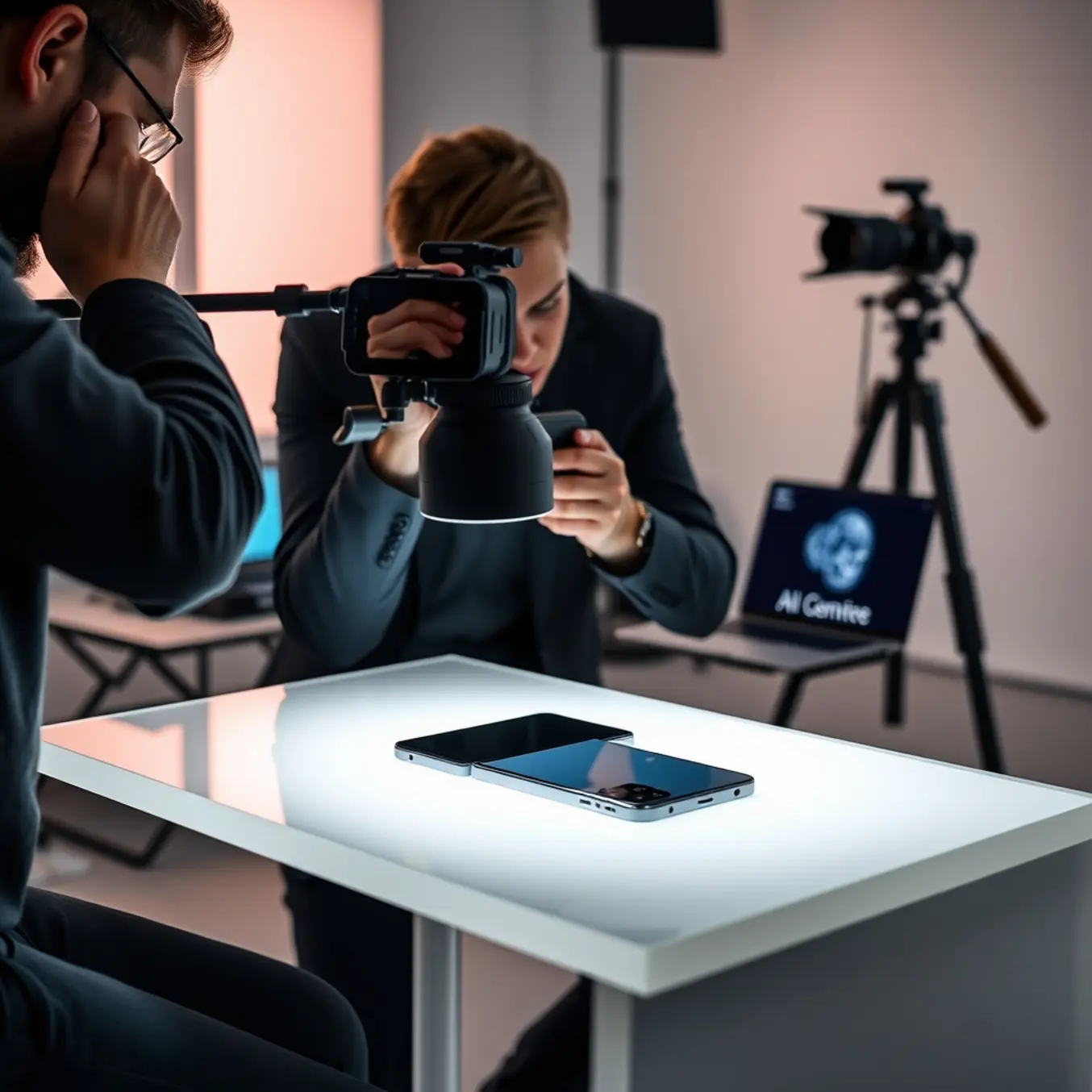
Traditional product photography is rapidly becoming obsolete as artificial intelligence reshoots the entire industry. For decades, businesses have struggled with the high costs, logistical nightmares, and creative limitations of conventional photo shoots. However, AI-powered solutions are now delivering professional-grade product imagery at a fraction of the cost and time.
Radical Cost Reduction
The most compelling advantage of AI photography is the staggering 90% cost reduction compared to traditional methods. Conventional product photography involves expensive equipment rentals, studio space, photographer fees, model costs, and post-production editing. In contrast, AI solutions eliminate nearly all these expenses while delivering comparable quality.
According to industry analysis, businesses typically spend between $50-$500 per product image using traditional photography. AI alternatives can reduce this to just $5-$50 per image while maintaining professional standards. This dramatic cost efficiency makes high-quality product photography accessible to businesses of all sizes, from startups to enterprise-level companies.
Accelerated Time-to-Market
Speed is another critical advantage where AI photography dominates traditional methods. Conventional photo shoots require extensive planning, scheduling, shooting days, and post-production timelines that can stretch over weeks. AI solutions can generate hundreds of product images in hours or even minutes.
This accelerated workflow means businesses can launch products faster, respond quickly to market trends, and maintain competitive agility. The ability to generate images on-demand eliminates the scheduling conflicts and production delays that plague traditional photography. Companies can now update their product catalogs and marketing materials almost instantly.
Unlimited Creative Possibilities
AI photography unlocks creative potential that was previously unimaginable or prohibitively expensive. Traditional photography is constrained by physical limitations—available props, lighting conditions, model availability, and location access. AI solutions transcend these boundaries, enabling businesses to place products in any environment, style, or context imaginable.
Advanced AI platforms can generate product images in diverse artistic styles, from photorealistic to abstract interpretations. Businesses can test multiple visual approaches without additional costs, ensuring they select the most effective imagery for their target audience. This creative flexibility extends to seasonal campaigns, cultural adaptations, and personalized marketing initiatives.
Scalability and Consistency
Traditional photography struggles with maintaining consistency across large product catalogs and multiple shooting sessions. Different lighting conditions, photographer styles, and equipment variations can create visual inconsistencies that undermine brand identity. AI solutions provide perfect consistency across thousands of product images.
The scalability of AI photography means businesses can maintain uniform quality whether they’re shooting 10 products or 10,000. This consistency strengthens brand recognition and creates cohesive visual experiences across all customer touchpoints. Automated workflows ensure that every image adheres to established brand guidelines and quality standards.
Environmental and Operational Benefits
Beyond cost and efficiency, AI photography offers significant environmental advantages. Traditional photo shoots generate substantial waste through disposable props, packaging materials, and transportation emissions. Digital solutions eliminate physical waste and reduce the carbon footprint associated with product photography.
Operationally, AI platforms streamline the entire image creation process. Teams can collaborate remotely, make real-time adjustments, and maintain centralized asset management. This digital workflow integrates seamlessly with e-commerce platforms, marketing tools, and content management systems, creating a more efficient operational ecosystem.
The transition to AI-powered product photography represents more than just technological advancement—it’s a fundamental shift in how businesses approach visual content creation. As these solutions continue to evolve, the gap between AI-generated and traditionally captured imagery will narrow further, making the case for AI adoption increasingly compelling for forward-thinking companies.
Top AI Product Photo Generators for Business
Midjourney: The Creative Powerhouse for High-End Visuals
Midjourney stands out as a premium choice for businesses seeking artistic, high-quality product imagery. Operating through Discord, this AI tool excels at creating visually stunning, brand-aligned visuals with remarkable creative control. Its advanced prompting capabilities allow for detailed style specifications, making it ideal for fashion brands, luxury goods, and creative agencies needing distinctive visual identities.
However, Midjourney’s Discord-based interface presents a learning curve, and its subscription model starts at $10 monthly. For businesses requiring consistent brand imagery across multiple products, the platform’s strength lies in conceptual work rather than precise product replication. Many e-commerce businesses use Midjourney for marketing collateral and campaign visuals where artistic interpretation takes priority over photorealistic accuracy.
DALL-E 3: User-Friendly Integration for Everyday Business Needs
Integrated directly into ChatGPT Plus and Microsoft’s ecosystem, DALL-E 3 offers exceptional accessibility for businesses already using these platforms. Its natural language processing understands complex prompts with minimal technical knowledge required, making it perfect for marketing teams and small business owners. The tool excels at generating realistic product shots and contextual scenes with reliable quality.
DALL-E 3’s commercial usage policy provides clear guidelines for business applications, though users should review OpenAI’s commercial terms carefully. Its integration with Microsoft Designer and Copilot creates seamless workflows for creating social media content, advertisements, and presentation materials. For businesses seeking an accessible AI solution with consistent results, DALL-E 3 delivers reliable performance across multiple industries.
Stable Diffusion: Customizable Solutions for Technical Requirements
Stable Diffusion offers unparalleled customization through open-source models and local installation options. This makes it particularly valuable for businesses with specific technical requirements or data privacy concerns. Companies can train custom models on their product catalogs, ensuring brand consistency and unique visual styles unavailable through other platforms.
The platform’s flexibility comes with increased technical complexity, requiring either technical expertise or third-party interfaces like Automatic1111. However, for businesses investing in proprietary AI capabilities, Stable Diffusion provides cost-effective scaling and complete control over generated content. Manufacturing companies, tech firms, and enterprises with large product catalogs benefit most from its customization potential and offline operation capabilities.
Canva AI: Streamlined Design for Marketing Teams
Canva’s AI image generator integrates seamlessly into its popular design platform, offering tremendous value for marketing teams and content creators. The tool simplifies creating product mockups, social media graphics, and promotional materials within existing design workflows. Its user-friendly interface requires no technical expertise, making AI-powered visuals accessible to entire marketing departments.
Canva Pro subscribers gain access to AI features alongside the platform’s extensive template library and collaboration tools. This integrated approach saves time and resources for businesses focused on rapid content creation. Small to medium-sized businesses, educational institutions, and marketing agencies find particular value in Canva’s all-in-one solution for visual content production.
Choosing the Right Tool for Your Business Objectives
Selecting the optimal AI product photo generator depends on your specific business requirements, technical capabilities, and budget constraints. Creative agencies and luxury brands often prefer Midjourney’s artistic output, while e-commerce businesses benefit from DALL-E 3’s reliability. Companies with technical resources may choose Stable Diffusion for customization, whereas marketing teams typically favor Canva’s integrated approach.
Consider conducting trials with multiple platforms to assess which aligns best with your workflow and quality standards. Many businesses successfully combine tools—using Midjourney for conceptual work and Canva for execution, for example. As AI technology evolves, staying informed about emerging AI art styles can help maintain competitive visual content strategies.
Ultimately, the most effective solution will balance creative needs with practical implementation, ensuring your business leverages AI’s potential while maintaining brand consistency and operational efficiency across all visual communications.
Crafting Perfect AI Product Prompts
Crafting the perfect AI product prompt requires understanding the essential components that transform basic descriptions into professional-looking product photos. The most effective prompts follow a structured formula: subject + lighting + background + style modifiers. This framework ensures AI image generators understand exactly what you want to create, resulting in consistent, high-quality outputs.
Mastering Lighting Descriptions
Lighting dramatically impacts how products appear in AI-generated images. Professional photographers use specific lighting setups to highlight product features, and you can achieve similar results through precise prompt wording. For product photography, consider using terms like “soft studio lighting” for even illumination, “dramatic side lighting” to create depth and shadows, or “natural window light” for an authentic, lifestyle feel.
According to photography experts, different lighting setups serve different purposes. Softboxes create gentle shadows perfect for showcasing product details, while rim lighting helps separate products from their backgrounds. When writing prompts, be specific about the lighting direction and quality—terms like “front-lit,” “backlit,” or “diffused lighting” provide clear guidance to the AI.
Choosing the Right Backgrounds
Background selection significantly influences how customers perceive your products. Clean, minimalist backgrounds like “pure white studio backdrop” work well for e-commerce listings, while contextual backgrounds such as “modern office desk” or “luxury marble surface” help customers imagine using the product in real-life situations.
Research shows that background context affects purchase decisions by helping consumers visualize product usage. For lifestyle shots, include environmental details that match your target audience’s preferences. Meanwhile, solid colored backgrounds in brand-appropriate hues can make products pop while maintaining visual consistency across your marketing materials.
Leveraging Style Modifiers
Style modifiers add the final professional touch to your AI product photos. These descriptive terms control the overall aesthetic, from photographic techniques to artistic treatments. Include specifications like “macro photography” for detailed close-ups, “shallow depth of field” to focus attention on key features, or “commercial product photography” for that polished, professional look.
You can explore various AI art styles to enhance your product presentations. For instance, “minimalist aesthetic” creates clean, modern images, while “cinematic lighting” adds drama and impact. Technical terms like “high-resolution,” “8K quality,” and “sharp focus” ensure the AI prioritizes image clarity and detail relevant to your products.
Putting It All Together
Here’s how these elements combine in a complete prompt structure:
- Subject: “A premium leather wallet”
- Lighting: “soft studio lighting with subtle rim light”
- Background: “dark oak wood surface”
- Style: “commercial product photography, shallow depth of field, professional lighting”
The complete prompt would read: “A premium leather wallet, soft studio lighting with subtle rim light, on a dark oak wood surface, commercial product photography, shallow depth of field, professional lighting.” This structured approach gives AI clear, comprehensive instructions to generate exactly what you envision.
Remember that specificity matters—instead of “good lighting,” describe exactly what “good” means for your product. Test different combinations and refine your prompts based on the results. With practice, you’ll develop a library of effective prompt templates that consistently produce professional product images tailored to your brand’s needs.
Advanced Commercial Applications
Lifestyle Integration: Crafting Relatable Brand Stories
AI transforms basic product images into compelling lifestyle narratives that resonate with target audiences. Advanced AI tools can place products in realistic environments, showing them in use by diverse models across various settings. This approach helps consumers visualize how products fit into their daily lives, significantly boosting engagement and conversion rates. For instance, furniture companies can showcase sofas in beautifully rendered living rooms, while fitness brands can display equipment in home gym setups. These contextualized images create emotional connections that simple product shots cannot achieve. Source: Forbes
Seasonal Campaign Automation
Brands can leverage AI to rapidly adapt product photography for seasonal promotions and holiday campaigns. Instead of costly reshoots, AI algorithms can modify existing product images to reflect seasonal themes, decorations, and color schemes. This enables marketers to maintain visual consistency while quickly responding to market opportunities. For example, a beverage company could transform summer drink photography into cozy winter scenes within hours rather than weeks. The technology also allows for testing multiple seasonal variations to identify the most effective visual approach before committing to full production. Source: Business Insider
Intelligent A/B Testing at Scale
AI-powered photography enables unprecedented A/B testing capabilities for marketing teams. Instead of creating limited variations manually, brands can generate hundreds of image variations testing different backgrounds, lighting conditions, product arrangements, and model demographics. The system can then analyze performance data to identify which visual elements drive the highest conversion rates. This data-driven approach eliminates guesswork from visual marketing decisions and provides concrete insights into customer preferences. Source: MarTech
Dynamic Product Variations
Managing multiple product variations becomes significantly more efficient with AI photography solutions. Brands can automatically generate professional images for different colors, sizes, and configurations without separate photoshoots for each variant. The technology maintains consistent lighting, angles, and composition across all variations, ensuring cohesive brand presentation. This is particularly valuable for fashion retailers with extensive color options or electronics companies offering multiple configurations. The system can even create “try-on” visualizations for apparel and accessories, reducing return rates and increasing customer confidence. Source: PictoMuse
Personalized Visual Marketing
Advanced AI systems can create customized product imagery based on individual customer data and preferences. By analyzing browsing history, demographic information, and past purchases, the technology generates personalized product presentations that speak directly to each customer’s interests. This level of personalization extends beyond simple product recommendations to include tailored visual experiences that significantly improve engagement metrics. Meanwhile, the system continuously learns from customer interactions, refining its visual generation capabilities over time to deliver increasingly effective marketing imagery. Source: Harvard Business Review
Cross-Platform Optimization
AI tools automatically optimize product photography for different platforms and devices, ensuring optimal presentation across social media, e-commerce sites, and mobile applications. The technology adjusts aspect ratios, file sizes, and visual elements to match each platform’s specifications and user expectations. Consequently, brands maintain visual consistency while maximizing impact across diverse digital touchpoints. This automated optimization saves significant time and resources while improving overall marketing performance through platform-specific visual strategies. Source: Shopify
ROI and Business Case
Traditional product photography involves significant upfront costs that can strain business budgets. Professional photoshoots typically range from $500 to $1,500 per day, plus expenses for photographers, studio rentals, equipment, and models. Additionally, businesses must account for the time investment required for setup, shooting, and post-production editing, which can extend project timelines by days or weeks.
In contrast, AI product photo generators offer a dramatically more cost-effective solution. These platforms typically operate on subscription models starting as low as $29-$99 per month, providing unlimited image generation capabilities. This represents potential savings of 70-90% compared to traditional photography methods, particularly for businesses requiring frequent product updates or multiple variations.
Time Savings and Operational Efficiency
The time efficiency of AI photography transforms how businesses approach product imagery. Traditional photography requires scheduling photographers, arranging locations, setting up lighting, and conducting multiple shots to capture the perfect image. This process can take several days from planning to final delivery.
AI generators eliminate these time-consuming steps by allowing businesses to create professional-quality images in minutes rather than days. Users simply upload product photos and select their desired backgrounds, styles, and settings. The AI handles the complex rendering process, delivering multiple variations simultaneously. This accelerated workflow enables faster product launches and more responsive marketing campaigns.
Scalability Advantages
AI photography solutions excel in scalability, allowing businesses to generate hundreds of product images without proportional cost increases. Traditional photography becomes exponentially more expensive as product catalogs grow, requiring additional photoshoots, equipment, and editing time for each new item.
With AI generators, creating variations for different marketing channels, seasons, or regional campaigns becomes economically feasible. Businesses can maintain visual consistency across their entire product line while adapting imagery for specific audiences or platforms. This scalability is particularly valuable for e-commerce businesses with extensive catalogs or those frequently introducing new products.
Real-World Performance Metrics
Case studies demonstrate compelling ROI from AI photography implementations. Fashion retailer ZMO.ai reported reducing product photography costs by 85% while increasing image production volume by 400%. Similarly, e-commerce businesses using AI generators have documented 30-50% reductions in time-to-market for new product launches.
The financial impact extends beyond direct cost savings. McKinsey research indicates that generative AI applications in marketing and sales could deliver value equivalent to 2.6 to 4.4 percent of industry revenues. For product photography specifically, businesses report conversion rate improvements of 15-30% when using AI-enhanced product imagery compared to standard photos.