The Ultimate Guide To Creating Anime Art With AI
Introduction to AI Anime Generation
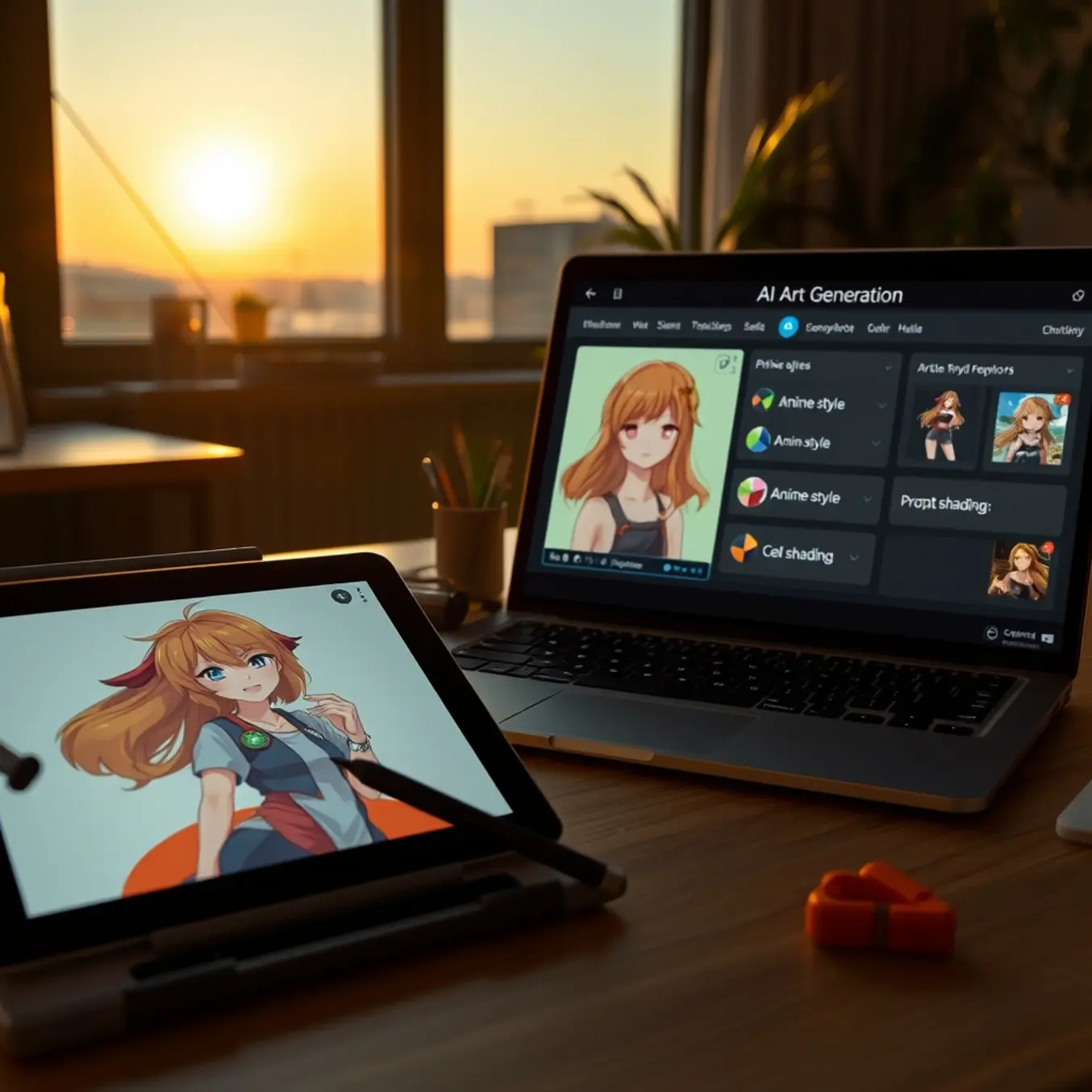
The AI art revolution has transformed digital creativity, with anime-style artwork emerging as one of its most popular applications. Artificial intelligence systems can now generate stunning anime characters, scenes, and illustrations that rival professionally drawn artwork. This technological breakthrough makes high-quality anime creation accessible to everyone, regardless of artistic training or technical drawing skills.
Why AI Excels at Anime Generation
Anime’s distinctive visual characteristics make it particularly well-suited for AI generation. The style features consistent patterns—exaggerated facial features, specific eye shapes, recognizable hair styles, and predictable color palettes—that machine learning algorithms can effectively analyze and replicate. Moreover, AI models trained on thousands of anime images develop an intuitive understanding of the artistic conventions that define the genre.
These systems learn the mathematical relationships between different anime elements, enabling them to create coherent characters and scenes that maintain stylistic consistency. The structured nature of anime art, with its clear line work and defined forms, provides AI with a reliable framework for generating convincing results. Consequently, users can produce professional-looking anime artwork with simple text descriptions rather than years of artistic practice.
The Impact on Creative Industries
AI anime generation is reshaping multiple creative fields, from independent comic creation to game development and animation pre-production. Studios can rapidly prototype character designs and concept art, while individual creators can bring their stories to life with professional-quality illustrations. The technology also serves as a powerful collaborative tool, allowing artists to quickly generate base images that they can then refine and enhance using traditional digital art techniques.
According to industry analysis, AI art tools are becoming increasingly integrated into professional creative workflows. The efficiency gains are particularly valuable in anime production, where tight deadlines and budget constraints often challenge traditional animation studios. Meanwhile, market research indicates growing acceptance of AI-generated content across entertainment sectors, suggesting continued expansion of these technologies into mainstream creative production.
Top AI Tools for Anime Art Creation
Stable Diffusion: The Open-Source Powerhouse
Stable Diffusion stands as a cornerstone in the AI art world, particularly for anime creation. As an open-source model, it offers unparalleled flexibility. Artists can run it locally on their own computers, providing complete control over the generation process and data privacy. Its true strength for anime lies in the vast ecosystem of custom models, often called checkpoints, specifically trained on anime and manga datasets.
Platforms like Civitai host thousands of community-developed models, such as Anything v3 and NovelAI Leaks, which are fine-tuned to produce high-quality anime characters with consistent styles. While the base software is free, achieving optimal results often requires a capable GPU and technical know-how to manage different models and settings. For a user-friendly experience, web-based services like Stable Diffusion Online offer a more accessible, though sometimes limited, entry point.
Midjourney: The Artistic Maestro
Accessible exclusively through Discord, Midjourney is renowned for its artistic and often cinematic output. While not exclusively an anime generator, it excels at creating stunning, painterly illustrations that can easily be steered toward an anime aesthetic with the right prompts. Its algorithms are particularly skilled with lighting, composition, and creating a cohesive artistic vision.
However, Midjourney operates on a subscription model, with no permanent free tier. Its strength is in generating unique, high-quality pieces rather than replicating a specific, uniform anime style. For artists seeking a tool that adds a layer of artistic interpretation and polish to their anime concepts, Midjourney is a top contender. You can explore more about different artistic applications of AI in our guide to the top AI art styles to explore.
NovelAI: The Anime Specialist
NovelAI was built with anime and storytelling at its core. Unlike more generalist models, its image generator is specifically trained on a curated dataset of high-quality anime illustrations. This results in an exceptional understanding of anime anatomy, aesthetics, and character design, making it incredibly easy to generate coherent and stylistically accurate characters without extensive prompt engineering.
A key feature is its emphasis on user privacy and the ability to “tune” models with your own data. NovelAI operates on a subscription-based credit system, positioning itself as a dedicated tool for anime enthusiasts and writers. It strikes a balance between the ease of use of a web service and the stylistic specialization that open-source models achieve through community effort.
Free and Accessible Alternatives
For those starting out or working with a limited budget, several capable free tools exist:
- Bing Image Creator (Powered by DALL-E 3): Microsoft’s tool is entirely free to use and produces impressive, prompt-aware images. While its anime style is more “Westernized,” it can create compelling characters and is an excellent, zero-cost option. [Source: Microsoft Bing]
- SeaArt.ai: This web-based platform offers a generous free tier and a wide array of anime-specific models and LoRAs (Low-Rank Adaptations), making it a strong free alternative to paid services.
- Playground AI: Provides a free daily allowance of image generations and includes filters and models suitable for creating anime-style artwork.
Crafting Perfect Anime Prompts
Mastering Character Descriptions
Creating compelling anime characters begins with detailed physical descriptions that capture unique features. Specify hair color and style, such as “silver-blue hair in a messy ponytail,” along with eye characteristics like “vibrant emerald eyes with star-shaped pupils.” Include clothing details, accessories, and any distinctive markings or tattoos that define the character’s appearance.
Personality traits significantly influence how characters are visually represented. For example, describing a character as “energetic and cheerful” versus “mysterious and reserved” will produce dramatically different visual outcomes. Additionally, mentioning character archetypes like “tsundere” or “kuudere” can help AI generators understand common anime tropes and produce more authentic results.
Bringing Characters to Life Through Poses and Expressions
Dynamic poses and expressive facial features add depth to your anime creations. Specify action-oriented stances like “leaping through the air with a determined expression” or emotional states such as “blushing slightly while looking away shyly.” These details help create characters that feel alive and emotionally resonant within their scenes.
Crafting Immersive Settings and Backgrounds
Anime settings range from futuristic cyberpunk cities to traditional Japanese landscapes, each requiring specific descriptive elements. For urban environments, include details about architecture, lighting, and atmosphere: “neon-lit Tokyo street at night with rain-slicked pavement reflecting colorful signs.” For natural settings, describe elements like “cherry blossom trees lining a peaceful riverbank during sunset.”
Mood and lighting dramatically affect the emotional impact of your scenes. Terms like “cinematic lighting,” “golden hour glow,” or “moody shadows” help establish the desired atmosphere. Consider the time of day, weather conditions, and overall color palette to create cohesive and visually striking environments that complement your characters.
Avoiding Common Prompt Mistakes
Many users struggle with vague or contradictory descriptions that confuse AI generators. Avoid generic terms like “beautiful” or “cool” in favor of specific, concrete details. Instead of “a pretty girl,” describe “a young woman with waist-length lavender hair and amethyst eyes, wearing a Victorian-style lace dress.”
Overloading prompts with too many elements can dilute the focus of your image. Prioritize the most important features and maintain consistency in your descriptions. For instance, mixing multiple art styles or time periods in a single prompt often produces confusing results. Stick to a coherent vision for best outcomes.
Advanced Anime Art Techniques
Mastering Character Consistency
Maintaining character consistency across multiple AI-generated images remains one of the most challenging aspects of anime art creation. Fortunately, several advanced techniques can help artists achieve remarkable stability in character appearance. Character embedding has emerged as a powerful method, where you train the AI on specific character references to create a unique identifier that can be applied across various scenes and poses.
Another effective approach involves using detailed textual descriptions with consistent keywords. For instance, including specific hair color codes, eye shape descriptors, and clothing details in every prompt ensures the AI reproduces these elements accurately. Many artists also create comprehensive character sheets with multiple angles and expressions to serve as reliable reference material for the AI system.
Platforms like PictoMuse offer specialized tools for character consistency, allowing artists to maintain facial features, proportions, and stylistic elements across different generations. These systems use advanced recognition algorithms to identify and preserve key character traits, even when changing backgrounds or poses dramatically.
Creating Dynamic Poses and Composition
Dynamic posing separates amateur anime art from professional-level work. The key lies in understanding body mechanics and implementing strategic camera angles. Rather than settling for static, straightforward compositions, experienced artists employ techniques like forced perspective, dramatic foreshortening, and dynamic camera positioning to create movement and energy within still images.
Action lines represent a fundamental tool for establishing motion and flow in anime compositions. These imaginary lines guide the viewer’s eye through the image while creating a sense of movement and direction. When working with AI, you can incorporate action line concepts through careful prompt engineering, describing specific body positions and movement trajectories that suggest motion rather than stillness.
Camera angle selection dramatically impacts the emotional impact of your anime art. Low-angle shots can make characters appear powerful or intimidating, while high-angle views often create vulnerability or innocence. Dutch angles (tilted horizon lines) introduce tension and unease, perfect for dramatic or action-oriented scenes. Experimenting with these perspectives in your AI prompts can yield significantly more engaging results.
Advanced Blending and Compositing Techniques
Professional anime artists rarely rely on single AI outputs for final pieces. Instead, they master the art of blending multiple generations to create superior results. Layer blending in software like Photoshop or GIMP allows artists to combine the best elements from different AI outputs—perhaps taking facial features from one generation, pose from another, and background elements from a third.
Masking techniques enable precise control over which parts of each AI generation contribute to the final composite. By carefully painting masks, artists can seamlessly integrate elements while maintaining consistent lighting and color schemes across the entire composition. This approach proves particularly valuable when dealing with complex scenes that require multiple characters or intricate background elements.
Style transfer represents another powerful blending method, where artists apply the visual characteristics of one successful generation to other elements. This technique helps maintain consistent artistic styles throughout a project while allowing for creative variation. Many AI art platforms now include built-in style transfer features that simplify this process significantly.
Post-Processing and Refinement
Essential Post-Processing for AI Anime Art
AI-generated anime art often requires a human touch to reach its full potential. While AI models produce impressive initial results, they can struggle with fine details, consistent coloring, and stylistic polish. Consequently, using traditional art software for post-processing is a critical step for artists who want to create professional, refined pieces. This process transforms a good AI base into a great final artwork.
Correcting Common AI Artifacts
The first step in refinement is identifying and fixing common AI-generated errors. These can include:
- Messed-Up Hands and Anatomy: AI models frequently struggle with complex structures like hands, often generating the wrong number of fingers or unnatural poses. Use your software’s brush and liquify tools to redraw or reshape these areas.
- Inconsistent Line Art: AI line work can be blurry, fragmented, or inconsistent in weight. Create a new layer and trace over the lines with a crisp, solid brush to achieve clean, professional-looking line art.
- Random Artifacts and Smudges: Look for strange, blurry patches or nonsensical details in the background or on clothing. These are easily painted over or cleaned up with the clone stamp or healing brush tools.
Addressing these fundamental issues establishes a clean foundation for all subsequent enhancements. For a deeper dive into the artistic possibilities, explore our guide on the top AI art styles to explore, which can inspire your refinement process.
Mastering Color Correction and Lighting
Color and lighting are what bring anime art to life. AI generations can sometimes appear flat or have unbalanced color palettes. Therefore, color correction is your most powerful tool for setting the mood.
Start by using adjustment layers, which allow for non-destructive edits. A Curves Adjustment can dramatically improve contrast and make colors pop. Meanwhile, a Hue/Saturation layer lets you fine-tune specific color ranges—for instance, making blues more vibrant or toning down an overly bright red.
Furthermore, don’t neglect the lighting. Add new light sources or enhance existing ones by painting with a soft, low-opacity brush on a layer set to “Overlay” or “Soft Light.” This technique can create beautiful rim lighting, enhance facial features, and add a sense of depth that the AI may have missed. According to Clip Studio Paint, understanding light and shadow is fundamental to achieving a professional anime style.
Adding Finishing Details and Textures
The final stage of refinement is where your personal style truly shines. This involves adding details that the AI didn’t generate.
Consider painting in finer strands of hair, adding sparkles to the eyes, or creating intricate patterns on clothing. You can also introduce textures to break up flat colors—like a canvas texture for the background or a subtle noise layer to simulate film grain. Many artists use custom brushes for effects like speed lines, sparkles, or foliage to efficiently add these anime staples.
Finally, sharpening the image is a crucial last step. However, apply sharpening filters subtly and selectively, focusing on key areas like the eyes and line art to avoid amplifying any remaining noise. As noted by Adobe, sharpening should enhance details, not create artifacts. By meticulously applying these finishing touches, you elevate your AI-generated artwork from a digital output to a polished, personal masterpiece.
Building Your Anime Art Portfolio
Creating Cohesive Character Series
Building a compelling anime art portfolio begins with developing cohesive character series that tell a story through visual consistency. Start by establishing a clear theme or narrative that connects your characters—whether it’s a fantasy adventure, school life scenario, or cyberpunk universe. This thematic foundation helps create emotional resonance with viewers and demonstrates your ability to maintain visual continuity across multiple pieces.
Consistent character design elements are crucial for series cohesion. Maintain uniform eye styles, hair treatments, and facial proportions throughout your characters. Additionally, develop signature color palettes and lighting techniques that become recognizable as your artistic fingerprint. Many professional artists create character reference sheets detailing these consistent elements before beginning a series.
Developing Your Unique Artistic Style
Your artistic style is what sets you apart in the competitive anime art landscape. While it’s natural to draw inspiration from established artists, your goal should be developing a distinctive approach that reflects your personal vision. Begin by analyzing what aspects of existing styles resonate with you—whether it’s specific line work techniques, coloring methods, or compositional approaches from various AI art styles to explore.
Experiment with blending different influences to create something uniquely yours. For instance, you might combine traditional anime facial features with unconventional background styles or merge different artistic movements. Document your experiments and note which combinations feel most authentic to your creative voice. Remember that style development is an ongoing process—even established artists continue refining their approaches throughout their careers.
Ethical Portfolio Presentation
When sharing AI-generated anime art, transparency about your creative process is essential. Clearly indicate which pieces were created using AI tools and describe your specific involvement in the generation process. This honesty builds trust with your audience and positions you as an artist who understands the ethical considerations in this evolving field.
Consider including “process shots” or development notes that show how you refined AI-generated base images through manual editing, composition adjustments, or color corrections. According to the Artnews analysis of AI art ethics, being transparent about your methodology helps establish your artistic integrity while navigating copyright considerations.
Portfolio Organization Strategies
Effective portfolio organization guides viewers through your artistic journey while highlighting your strengths. Group related works into series or thematic collections, making it easy for potential clients or followers to understand your creative focus. Include both finished pieces and works-in-progress to demonstrate your artistic process.
Create dedicated sections for different types of work—character designs, environmental art, story illustrations—depending on your specialization. The Creative Bloq portfolio guide recommends prioritizing your strongest pieces at the beginning and end of your portfolio to create lasting impressions. Meanwhile, regularly update your collection to reflect your evolving skills and artistic direction.